
Reviewed by the DCI Leak Detection team · Last updated September 2026
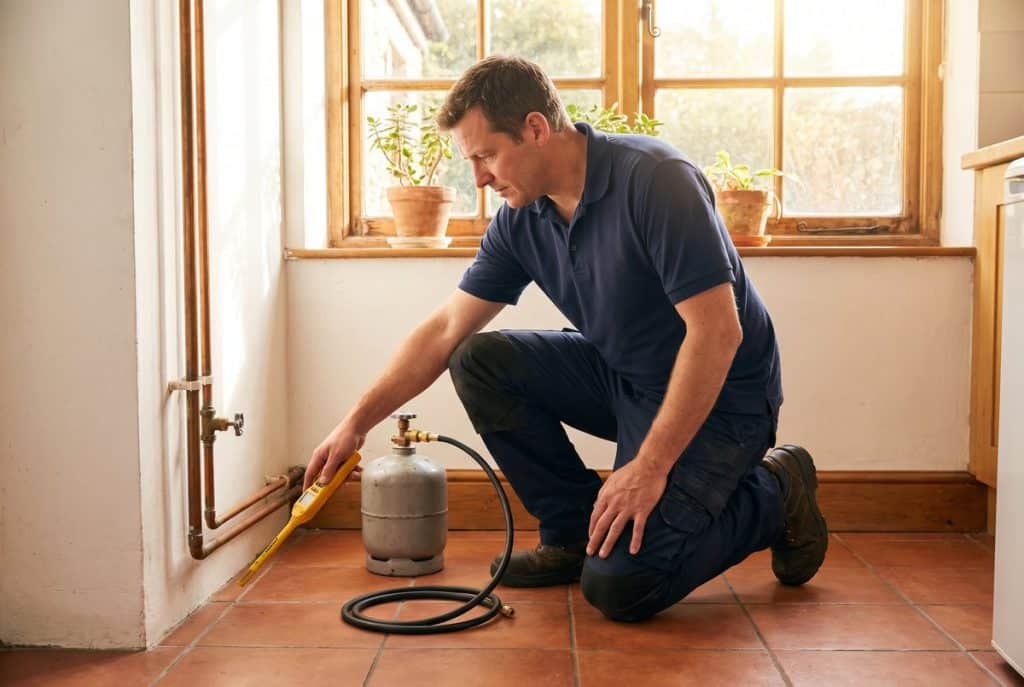
Tracer gas leak detection fills a drained, sealed pipe with 5% hydrogen in 95% nitrogen. The hydrogen escapes through the leak, rises through screed, concrete and tarmac, and a hand held detector pinpoints where it surfaces. The mix is non-flammable and non-toxic, and it finds the silent pinhole leaks that acoustic and thermal methods miss.
If a plumber or an insurer has mentioned a tracer gas test, the leak is usually somewhere nobody can hear or see it: under a screeded floor, a concrete slab or a driveway. This page explains what the gas is, what happens on the day, and where the method stops. If you already know you need one, our tracer gas leak detection service page is where to book.
On this page
- What tracer gas is, and why it is safe in a home
- How does tracer gas leak detection work?
- Why hydrogen finds holes nothing else can
- What a tracer gas leak test finds best
- What tracer gas cannot do
- How long a test takes
- What you need to do before the visit
- Tracer gas, acoustic and thermal imaging compared
- From the find to the trace and access report
- Frequently asked questions
What tracer gas is, and why it is safe in a home
Hydrogen tracer gas comes ready mixed in a cylinder: 5% hydrogen in 95% nitrogen. The nitrogen is there to dilute the hydrogen. Hydrogen only burns in air once it makes up roughly 4% of the mixture, and a 5% blend can never get there: as it mixes with air there is either too little hydrogen or too little oxygen for a flame. ISO 10156, the standard that classifies gas mixtures, rates it non-flammable.
It is also non-toxic and non-corrosive, it leaves no residue, and the manufacturers approve it for drinking water pipework. Once it leaves the pipe it disperses within minutes, which is why the test is done in occupied houses with the family at home.
How does tracer gas leak detection work?
The idea is simple. If a pipe is empty, sealed and full of gas, the only way out is through the hole. Find where the gas surfaces and you have found the leak. Six steps get you there.
1. Prove and isolate. A pressure test comes first, to confirm the section is losing water and to close it off from everything else.
2. Drain. Gas cannot travel through a pipe full of water, so the heating circuit or supply run is drained down. There is no version of this test that runs on a live system.
3. Seal and fill. Plugs close the open ends and the gas goes in through a regulator at a controlled, low pressure. The gauge confirms the section is holding it.
4. Wait. At the leak the gas escapes and starts rising. From a shallow pipe it can surface in minutes; from a deep one it takes longer.
5. Sweep. The detector draws air through a probe and shows hydrogen in parts per million, reading from 1 ppm. The engineer walks it slowly along the pipe route. The reading climbs near the leak and peaks directly above it.
6. Mark and record. The spot is marked and photographed, the readings and test pressures are written up, and the section is refilled.
Tracer gas leak detection equipment is modest: a cylinder, a regulator, a set of plugs and the detector. How it sits alongside the rest of the kit is on our leak detection equipment page. The skill is in the isolation and in reading the pattern of readings.
Why hydrogen finds holes nothing else can
Hydrogen is the smallest and lightest molecule there is. Two things follow.
First, it gets through holes that water cannot. A hairline crack or a pinhole in a plastic pipe may weep so slowly that it makes no sound, which is why acoustic equipment misses it. Hydrogen goes straight through the same gap.
Second, it rises. It permeates screed, concrete, tarmac, block paving, tiles, floorboards, carpet and grass, and there is so little hydrogen in normal air that a rising reading can only be gas from the pipe.
The one habit to know about is that gas takes the path of least resistance. Usually that is straight up. Sometimes it is along a trench, a duct or a gap under a membrane, which is why the engineer reads the whole pattern before marking the floor, and confirms the find with a second method.
What a tracer gas leak test finds best
Tracer gas is the method of choice wherever the pipe is buried in something solid and the leak is quiet.
Underfloor heating and heating pipes in screed. Tracer gas central heating tests are the standard way to find a failed underfloor loop or a weeping joint under screed. If your boiler keeps losing pressure and the visible pipework is dry, this is often where the search ends up. See our underfloor heating leak detection page.
Supply pipes under slabs and drives. Tracer gas water leak detection works on mains supply pipes under concrete floors, patios and driveways, including the long plastic runs common in rural Cornwall and Devon. Plastic carries sound poorly, so gas often succeeds where a ground microphone gave up. See underground water leak detection.
Pool pipework. Pipes under pool surrounds sit in ground that is often dry or gravelly, poor for listening and good for gas. See swimming pool leak detection.
Pinhole leaks that make no noise. Hairline cracks on any pipe, in any material, too small and too slow for a correlator or a thermal camera to notice.
What tracer gas cannot do
Every method has an edge, and it is fairer to say where this one is before the visit than after it.
A system that cannot be isolated. The section has to hold gas. If it cannot be closed off from the rest of the pipework, or the open ends cannot be plugged, there is nothing to fill.
A pipe that is open at one end. The vent pipe and overflow on an open vented heating system are open to the air by design, so gas leaves through them as fast as it goes in. Those runs are capped for the test or checked another way.
A very deep or vapour sealed floor. The deeper the pipe, the longer the gas takes to rise, and a waterproof membrane or a sealed basement floor can hold it below the surface or push it sideways. The test usually still works, but it is slower, the reading can appear away from the leak, and it needs a second method to confirm the spot.
How long a test takes
A single pipe run is usually a matter of hours, often two to four from arrival to a marked spot. Depth and layout set the pace: gas from a pipe just under a screed can surface within minutes, a deep supply pipe under a thick slab takes longer, and a run with several branches takes more sweeping. If the section is isolated and holding, the gas will find the hole. The engineer's job is to be patient enough to let it.
What you need to do before the visit
Nothing hazardous, and nothing that needs skill. The engineer does the isolation, the draining and the refilling. What helps is access: to the stopcock, the boiler, any isolation valves, and the floors along the likely pipe route. The detector reads through carpet and tiles, so floor coverings stay down.
If the suspect section is your heating, plan for it to be off for the visit, which matters more in winter. A supply pipe test means the water is off for a similar spell.
Tracer gas, acoustic and thermal imaging compared
Tracer gas is the tool you reach for when the others go quiet. On most jobs the three share the work in one visit: thermal imaging as the first sweep on a heating leak, acoustic equipment to pinpoint on metal pipes under pressure, and gas when the pipe is plastic, quiet or buried in something solid.
| Method | Best for | Cannot do |
|---|---|---|
| Tracer gas | Pipes in screed, concrete, tarmac and paving; plastic pipe; pinhole leaks that make no noise; underfloor heating; pool pipework | A section that cannot be isolated or drained; a pipe open at one end; very deep or vapour sealed floors without a second method to confirm |
| Acoustic (correlator, ground microphone) | Pressurised metal mains and supply pipes; leaks loud enough to hear; long buried runs where the pipe route is known | Plastic pipe, which carries sound poorly; very small or low pressure leaks; noisy sites with traffic or plant |
| Thermal imaging | Warm heating pipes under thin floors; damp patches on walls and ceilings; a fast survey of a whole room | Cold water leaks with no temperature difference; anything behind a thick slab, because it reads surface temperature only |
From the find to the trace and access report
The reason the method matters to an insurer is the record it leaves: the section tested, the pressure it held, the gas readings along the route, and a marked, photographed location. That is the evidence a trace and access report is built on, and it is what lets the repair open one small area rather than a whole floor. It matters to the builder too, who has to break out a solid floor and wants to be sure of the square. We find your leak, mark it, and put the evidence in your hands.
Frequently asked questions
Is tracer gas safe to use in an occupied house?
Yes. The mix is 5% hydrogen in 95% nitrogen. Hydrogen only burns in air above roughly 4%, and a 5% blend can never reach that once it mixes with air, so ISO 10156 classes it non-flammable. It is non-toxic, leaves no residue, is approved for drinking water pipework, and disperses within minutes of leaving the pipe.
Do I have to drain my central heating for a tracer gas test?
The section under test does, yes. Gas cannot travel through a pipe full of water, so the suspect circuit is isolated, drained and sealed before it is filled. The engineer does the draining and refills afterwards. Expect the heating to be off for the visit, which matters more in winter than in summer.
Can tracer gas find a leak under a concrete floor or driveway?
Yes, and it is usually the best tool for the job. Hydrogen is the smallest, lightest molecule, so it rises through screed, concrete, tarmac, block paving and grass and is picked up at the surface. The deeper the pipe, the longer the gas takes to appear, so a thick slab means a slower test rather than a failed one.
How accurate is a tracer gas test?
On a pipe in a solid floor the detector normally narrows the leak to within a few centimetres, because the reading peaks directly above the hole. Loose ground, trenches, ducts and membranes can carry the gas sideways before it surfaces, so the engineer reads the pattern of readings rather than the first beep and confirms with a second method.
Does tracer gas work on plastic pipes?
Yes, and that is one of its main advantages. Acoustic equipment struggles on plastic because the pipe carries leak noise poorly. Gas does not care what the pipe is made of; it only needs a hole to escape through. Sewerin lists customer supply pipes and underfloor heating among the standard uses, and both are mostly plastic.
Sources: Sewerin, Leak Tools, PCLA, MML Plumbing, Clear Flow Leak Detection, Rainbow Restoration, WestAir Gases and the ECNDT 2006 paper on hydrogen as a tracer gas. Checked September 2026.
Leak under a floor, a slab or a drive?
DCI Leak Detection finds your leak across Cornwall and Devon with tracer gas, acoustic and thermal imaging equipment, and gives you an insurer-ready report. No find, no fee on residential work, subject to terms. Not sure yet? Try the free one-minute leak checker. We cover the whole of Cornwall and Devon.
Call Dickie on 07822 025 911 Fast response across Cornwall & Devon · Insurance-approved reports