
Central heating leak detection pinpoints where your heating circuit is losing water without ripping up floors. The most common sign is a boiler that keeps losing pressure. DCI uses thermal imaging, tracer gas and pressure testing across Cornwall and Devon, with No Find, No Fee on residential work (subject to terms).
Boiler losing pressure? That is the classic sign of a heating leak
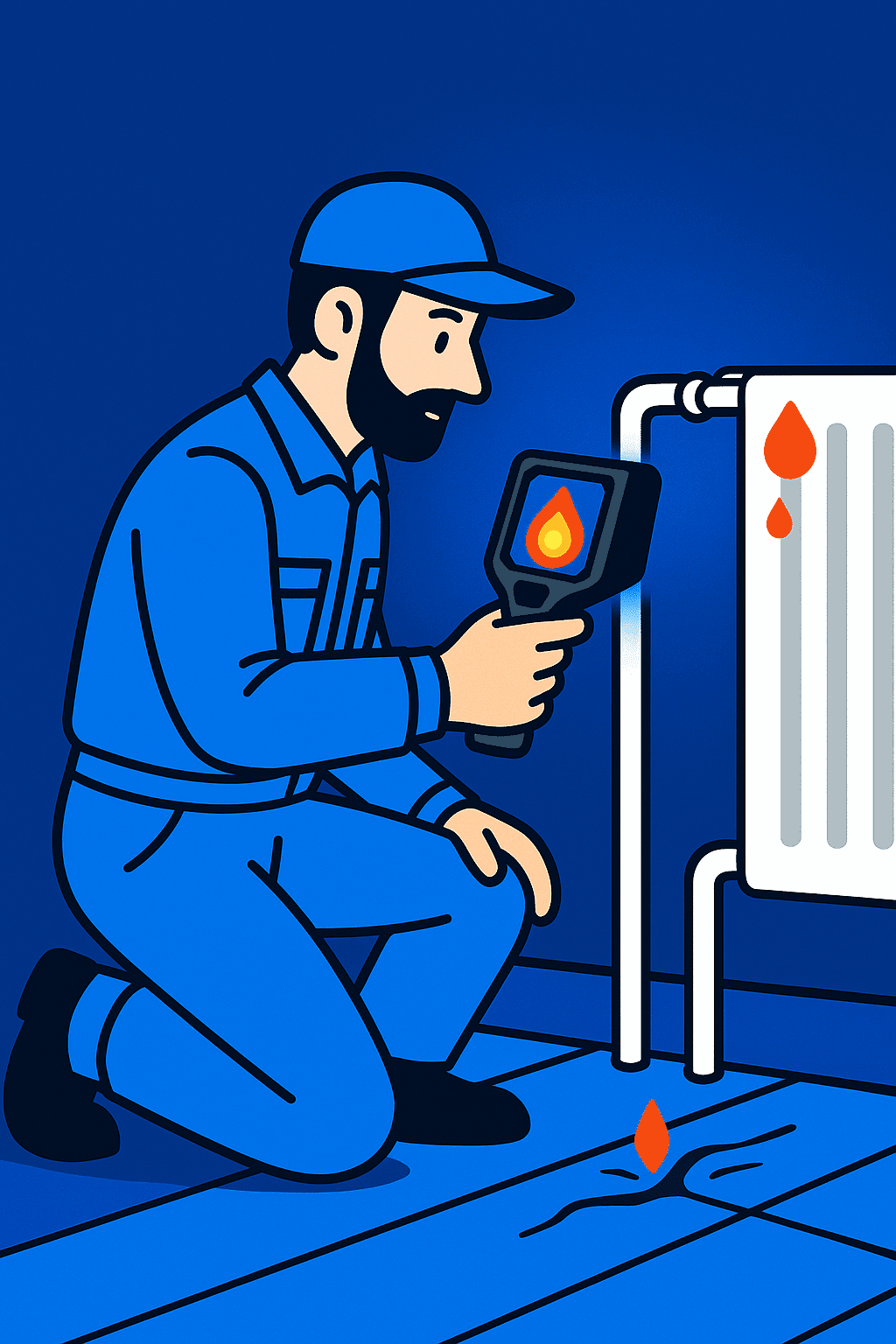
Most central heating leaks announce themselves on the boiler’s pressure gauge long before any water shows. A sealed heating system is a closed loop: the water inside has nowhere to go, so if the gauge keeps dropping and you keep topping it up through the filling loop, that water is escaping somewhere.
Small movements on the gauge are normal. Pressure rises as the system heats and falls again as it cools. What is not normal is a steady downward drift, or a system that needs re-pressurising every few days. That points to one of two things: a leak somewhere on the heating circuit, or a faulty component such as the expansion vessel or pressure relief valve. Our guide to why a boiler keeps losing pressure walks through how to tell the difference.
The frustrating part is that heating circuit leaks rarely show themselves. The water often escapes under a floor, soaks into screed or insulation, or evaporates off hot pipework before it can stain a ceiling. That is exactly the kind of leak professional heating leak detection is built for.
Other signs your heating system is leaking
Pressure loss is the headline symptom, but heating circuit leaks leave other fingerprints around the house. Any of these alongside a dropping gauge makes a hidden leak the most likely explanation:
- Radiators that need bleeding again and again. Air keeps entering the system as water escapes, so cold tops on radiators return within days of bleeding them.
- Damp patches with no obvious source. Staining on a ceiling below a bathroom, damp skirting boards, or a musty smell near pipe runs.
- Warm patches on a solid floor. Hot water from a buried pipe heats the screed above it, so a leak can feel like a small patch of underfloor heating you never installed.
- The boiler locking out. Most modern boilers shut down on low pressure, so repeated lockouts on a cold morning often trace back to a slow leak.
- Rust or scale at joints. Weeping compression fittings and radiator valves leave white or green crusty deposits long before they drip visibly.
Before assuming the worst, it is worth checking the visible parts of the system: radiator valves, the boiler’s external pipework, and any pipes you can see. Our guide on how to find a leak in a central heating system walks through those checks step by step. If everything visible is dry and the pressure still falls, the leak is hidden, and that is where we come in.
Why central heating leaks are so hard to find
Heating pipework is the most hidden plumbing in the house. Flow and return pipes run under floorboards, through joists, and inside solid floors, and a leak can sit a long way from where any damp finally appears. Three things make heating leaks especially good at hiding:
Microbore pipework
Many UK homes, particularly those plumbed from the 1970s onwards, use microbore copper pipe of 8 mm to 10 mm. It is narrow enough to bend by hand, which made installation quick, but it kinks easily, blocks with sludge, and weaves long unbroken runs beneath floors. A pinhole in a microbore run can weep slowly for months without an obvious sign beyond the dropping gauge.
Pipes buried under screed and floors
In homes with solid floors, heating pipes are often set straight into the screed. Escaping hot water spreads beneath the slab rather than rising, so the first visible clue might be a warm patch on the floor, lifting tiles, or damp at the bottom of a wall in a different room entirely.
Inhibitor loss and corrosion
Heating water is dosed with corrosion inhibitor to protect radiators and pipework. Every time you top up the pressure, fresh water dilutes that protection. British Standard BS 7593:2019 says inhibitor concentration should be checked and re-dosed after dilution, because under-protected systems corrode from the inside, producing the sludge and pinhole leaks that cause yet more pressure loss. A slow leak left alone tends to multiply.
How we find heating leaks without ripping up your floors
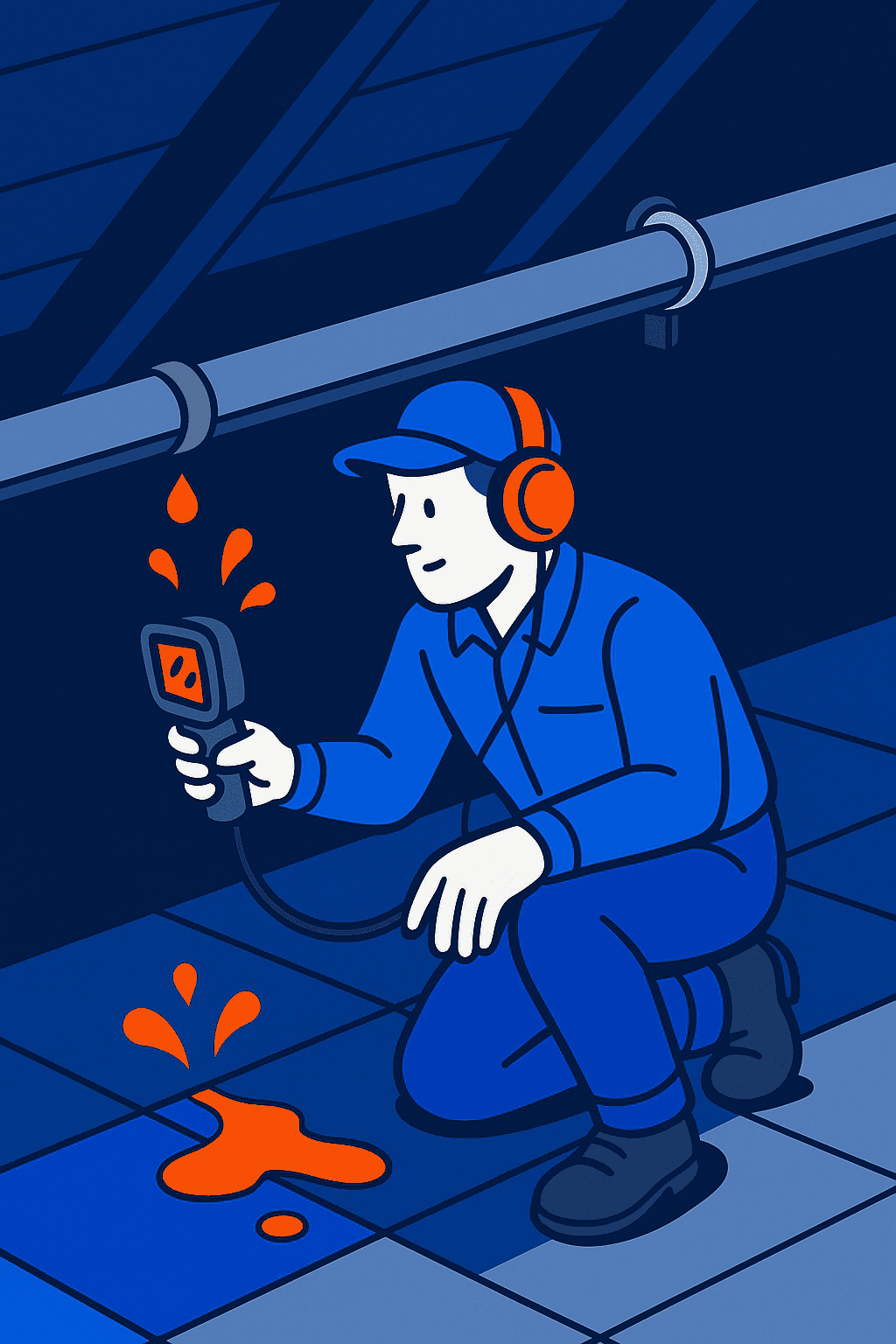
The old way of finding a heating leak was to guess, then lift floorboards or break out screed until someone found water. We work the other way round: confirm the leak, narrow it to a zone, then pinpoint it, all before anything is opened up.
Pressure and isolation testing
We start by confirming the loss rate and isolating sections of the system, such as individual circuits or the boiler itself. Watching how the pressure behaves with each zone shut off tells us whether the fault sits in the boiler, the radiators, or a buried pipe run, and roughly where.
Thermal imaging the circuit
With the heating running, escaping hot water leaves a heat signature that our cameras can see through floor coverings. Thermal imaging leak detection maps the pipe runs themselves, then highlights the unusual warm plume where water is getting out.
Tracer gas testing
For the smallest leaks, we drain the circuit and introduce a hydrogen and nitrogen tracer gas mix. The gas escapes through the same hole the water did and rises through screed, tiles and floorboards to a sensitive detector at the surface. Tracer gas leak detection is the method of choice for micro-leaks buried in solid floors.
Most jobs use a combination of these methods. The result is a marked location, usually accurate to a small area of floor or wall, so the repair means one neat access point instead of a demolition job.
Sealed system basics: what your pressure gauge should read
A quick reference for what healthy looks like on a sealed central heating system:
- Cold: the gauge should sit at 1 to 1.5 bar. Boiler manufacturers such as Worcester Bosch and Ideal both give this as the normal cold range.
- Hot: pressure rises as the water expands, typically up to around 2 bar. It should settle back down as the system cools.
- Below about 0.5 bar: water has been lost and most boilers will lock out until the pressure is restored.
Two components manage that pressure for you. The expansion vessel absorbs the rise as the water heats, and the pressure relief valve discharges water outside if pressure climbs too high. Either one failing can mimic a pipework leak: a flat expansion vessel sends pressure swinging high then low, and a passing relief valve quietly dumps system water down an outside pipe. Part of our job is ruling these out before anyone goes looking under floors.
Topping up through the filling loop is fine occasionally. Needing to do it weekly is not, and repeatedly adding fresh water also dilutes the inhibitor that protects your system. If you find yourself watching the gauge, our guide on how to increase boiler pressure covers the safe way to re-pressurise while you arrange a proper investigation.
One honest note: DCI finds leaks in the heating circuit and pipework. Any work on the boiler itself or another gas appliance is a job for a Gas Safe registered engineer, which is a legal requirement in the UK.
Insurance and trace and access cover
Hidden heating leaks are exactly what trace and access cover exists for. Most UK buildings insurance policies include it, and it pays the cost of finding the leak and making good the access, such as reinstating floors opened to reach the pipe. Cover limits are commonly £5,000 to £10,000 but vary by insurer, and the repair of the pipe itself usually is not included, so check your policy wording. Our plain-English guide to what trace and access cover is explains exactly what insurers do and do not pay for.
Every DCI detection visit comes with a written, insurance-ready report: where the leak is, how we found it, photographs and thermal images. Insurers accept these reports as evidence for trace and access claims, which takes a lot of the stress out of the process.
What to expect from a DCI heating leak detection visit
Tell us the symptoms
Pressure drops, top-up frequency, any damp or warm patches. This shapes which methods we bring.
Confirm and isolate
Pressure and isolation testing proves the leak is real and narrows it to a section of the system.
Pinpoint the leak
Thermal imaging and tracer gas locate the exact escape point through floors and walls, non-invasively.
Marked location and report
You get the leak position marked on site plus a written, insurance-ready report with images.
Most domestic surveys are completed in a single visit. We cover the whole of Cornwall and Devon from our base near Saltash, with fast response and no call-out fees, and residential work is No Find, No Fee (subject to terms).
Helpful heating leak guides
Want to understand the problem before we visit? These plain-English guides cover the most common heating leak questions we hear:
- How to find a leak in a central heating system covers the DIY checks worth doing before calling anyone.
- Why is my boiler leaking water? explains drips from the boiler itself and what they mean.
- How to increase boiler pressure shows the safe way to top up a sealed system.
- Underfloor heating leaks: what happens and what to do covers leaks in screed-buried UFH circuits.
Stop topping up. Find the leak.
If your boiler keeps losing pressure, the leak is already costing you in water, energy and slow damage to your home. Our heating leak detection pinpoints it without wrecking your floors, and the insurance-ready report helps you claim the cost back.
Call Dickie on 07822 025 911No Find, No Fee on residential work (subject to terms) • Fast response across Cornwall and Devon • No call-out fees
Recent central heating leak detection jobs
Real jobs from our records, with the customer details left out:
Where we cover
We provide central heating leak detection across Cornwall and Devon from our base at Tideford, near Saltash. Local pages: Plymouth, Exeter, Truro, St Austell, Newquay, Falmouth, Torquay, Newton Abbot, Barnstaple, Liskeard, Saltash, Tiverton, Bodmin, Launceston, Penzance, Helston, and the full list on our Cornwall and Devon pages.