

Who to Call for a Leak Under the Floor (Cornwall & Devon Guide)
Water pooling mysteriously? Floorboards warping? Boiler pressure dropping daily? After 30 years tracking down hidden leaks across Devon and Cornwall, I can tell you this: calling the wrong person for an underfloor leak costs twice – once for their failed attempt, again for the specialist who actually finds it. Let me save you that mistake.
First turn off your stop tap and take photos for insurance. For active flooding or a burst pipe, call an emergency plumber. For a hidden leak with no clear source, or when your insurer needs a report, call a leak detection specialist who locates it without lifting your floors.
When you've got a leak under the floor, knowing who to call can mean the difference between a £200 fix and £2,000 of unnecessary damage. Whether it's burst pipes flooding your kitchen, mysterious damp patches appearing through floorboards, or your underfloor heating losing pressure, this guide shows you exactly which professional to contact, what they'll do, and how to protect your property (and wallet) while you wait.
Quick Answer — Who to Call by Situation
Emergency Decision Guide
- Burst pipe / active flooding: Emergency plumber – immediate response needed
- Leak but source unknown: Leak detection specialist (non-destructive methods)
- Central heating losing pressure / pipes under floor: Heating-safe plumber or central heating leak detection specialist
- Underfloor heating leak: UFH-experienced leak detection engineer or heating specialist
- Manifold leaking: Heating engineer (manifold repair/replacement specialist)
- Suspected mains supply before your stop tap: Your water company (free investigation)
Here's what most homeowners don't realise: that "simple" underfloor leak might not be simple at all. I've seen emergency plumbers tear up entire bathroom floors looking for leaks that a specialist could've pinpointed to within 10cm using acoustic leak detection. The key is matching the problem to the right professional.
First Steps Before You Call Anyone
Right, before you dial anyone, these five actions could save you hundreds in emergency call-out charges and prevent thousands in water damage. If you're not sure what to do if you think you have a water leak, start here:
Immediate Action Checklist
- Turn off your stop tap – Usually under the kitchen sink, turn clockwise until tight (see our guide on how to find your water shut-off valve)
- Isolate electrics if water near sockets – Switch off at consumer unit if any water near electrical points
- Move valuables and furniture – Get everything away from the affected area
- Take photos for insurance – Document everything: damage, water meter reading, affected areas
- Note boiler pressure changes – If it's dropping, you've likely got a heating system leak (why boiler pressure keeps dropping)
- Check your water meter – Turn off stop tap, wait 30 mins, check if meter's still moving
- Clear access routes – Whatever professional arrives will need space to work
Sure there is a leak, but not where?
Under a solid floor the escape point is rarely above the damp patch, and lifting the floor to go looking is the expensive way to find out. We trace it across Cornwall and Devon without taking the floor up, and mark the exact spot for whoever does the repair.
Call Dickie on 07822 025 911Who Handles What (Typical Response)
Understanding the difference between professionals can save you calling three people when one would do. Here's exactly who does what:
| Professional | Best For | Methods Used | Typical Visit Length | Can They Fix? |
|---|---|---|---|---|
| Emergency Plumber | Burst pipes, flooding, visible leaks | Visual inspection, basic tools | 1-2 hours | Yes - visible issues |
| Leak Detection Specialist | Hidden leaks, insurance claims, minimal damage needed | Thermal imaging, tracer gas, acoustic listening, moisture meters | 2-6 hours | Some offer repairs (we do) |
| Heating Engineer | Boiler issues, radiator leaks, manifold problems | Pressure testing, system knowledge | 1-3 hours | Yes - heating specific |
| Water Company | Mains leaks before boundary | Acoustic logging, pressure monitoring | 1-2 hours | Only their pipes |
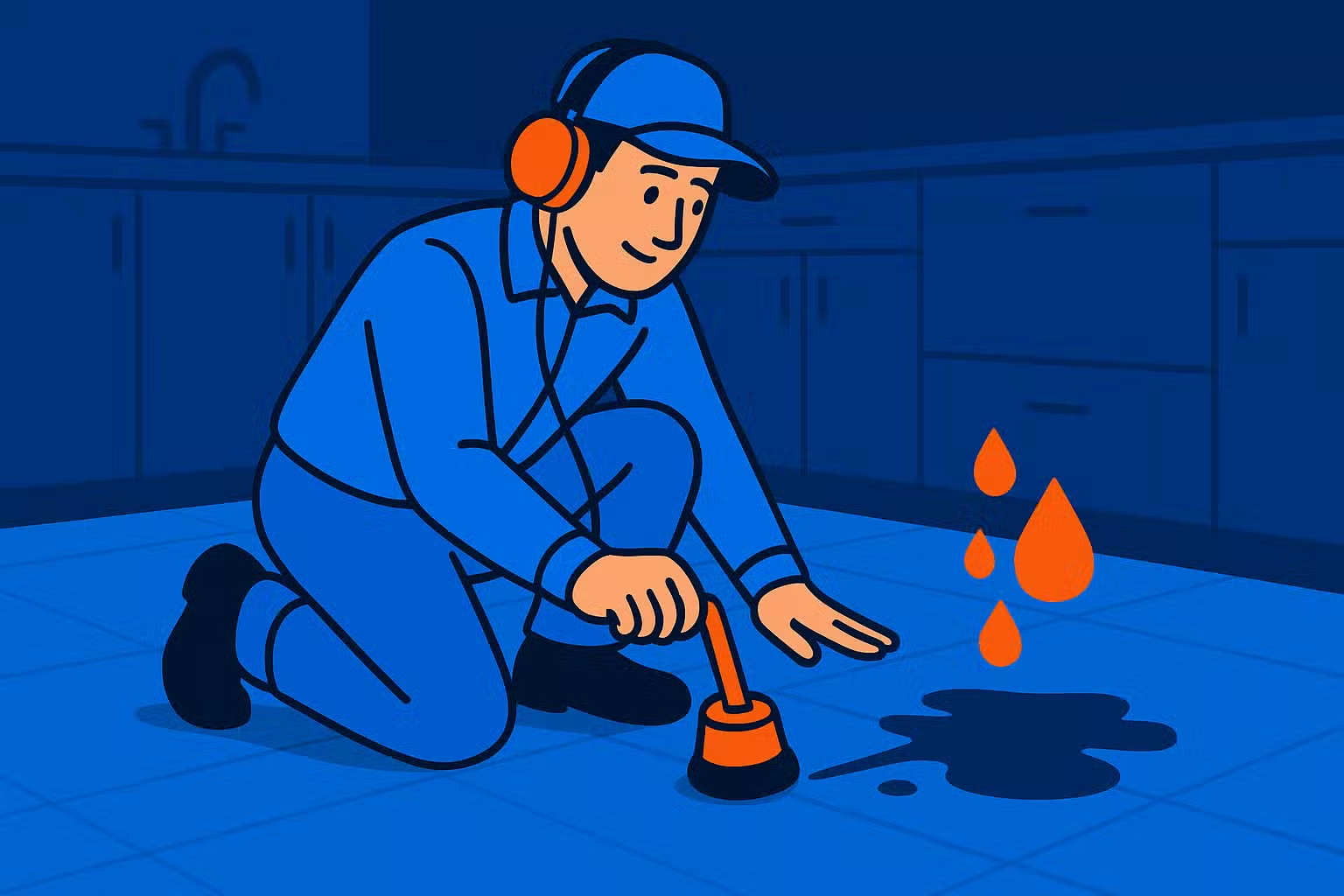
The Real Difference: Destructive vs Non-Destructive
Here's what separates a proper leak detection specialist from a general plumber: we don't guess. Using thermal imaging cameras, we can see temperature changes through your floor. Cold spots show water leaks on supply pipes, warm spots reveal heating leaks. No ripping up floors on a hunch.
When to Call an Emergency Plumber
Emergency plumbers are your first call when water's actively flooding. They'll stop the immediate problem but might not find hidden sources. Call them for:
- Burst pipes with water gushing out
- Overflowing toilets or tanks
- Complete loss of water supply
- Visible pipe failures you can see
- Obvious sink leaks underneath cabinets
Don't call them for slow leaks, mystery damp patches, or when you need an insurance report. That's where specialists come in.
When You Need a Leak Detection Specialist
This is where my 30 years comes in handy. Leak detection specialists use non-invasive technology to find hidden water leaks in your house without destroying your home. Our plumbing leak detection services are essential when:
- You can hear water but can't see it
- Damp patches appear but no visible source
- Insurance requires a trace and access report
- Multiple rooms affected (suggests hidden pipe run)
- Previous repair attempts have failed
- You need minimal damage to expensive flooring
Underfloor Heating Leaks Explained
UFH leaks are a different beast entirely. After investigating hundreds across Cornwall and Devon, I can tell you they're rarely where you think. The manifold might be dripping, but the actual leak could be 20 metres away in a pipe loop. For a comprehensive understanding, see our guide on underfloor heating leaks: what happens and what to do.
Signs of Underfloor Heating Leaks
Visual Signs
- Wet patches that reappear after drying
- Tiles lifting or grout darkening
- Wooden floors cupping or warping
- Efflorescence (white powder) on concrete
- Condensation that might actually be caused by hidden leaks
System Signs
- Pressure gauge dropping daily
- One zone not heating properly
- Manifold constantly dripping
- Pump running continuously
Hidden Signs
- Mould in unexpected places
- Musty smell in specific rooms
- Higher energy bills
- Boiler firing more frequently
UFH Leak Detection Process
Finding underfloor heating leaks requires specialist knowledge. We don't just look for water – we understand how UFH systems work. The process typically involves:
- Manifold isolation – Test each loop individually to identify which circuit's leaking
- Thermal imaging – Map the pipe routes and spot temperature anomalies
- Pressure testing – Confirm which loop won't hold pressure
- Tracer gas injection – For plastic pipes that don't show on thermal (uses safe nitrogen/hydrogen mix)
- Precise marking – Mark leak location for minimal floor damage
Manifold Leaks vs Pipe Leaks
If your manifold's dripping, you might get lucky – these are often repairable without floor access. But here's how to tell the difference:
- Manifold leak: Visible drips at connections, pressure drops quickly when system's hot, all zones affected equally
- Pipe leak: One zone loses pressure, floor damp in specific area, pressure drops whether hot or cold
How Insurance Helps with Underfloor Leaks
Most home insurance covers trace and access for water leaks, but you need to understand the process. After handling hundreds of insurance claims across Cornwall and Devon, here's what actually matters. According to Defaqto, 97% of buildings insurance policies include trace and access cover as standard:
What Insurance Typically Covers
- Trace and access: Finding and accessing the leak (typically £5,000-10,000 cover)
- Escape of water: Damage caused by the leak
- Alternative accommodation: If property's uninhabitable
- Contents damage: Furniture and belongings affected
What They Don't Cover
- The faulty pipe itself (wear and tear)
- Damage from gradual leaks you ignored
- Poor workmanship from previous repairs
- Lack of maintenance issues
Evidence You'll Need
Insurance Claim Checklist
- Photos of all damage (date-stamped)
- Professional leak detection report
- Invoices for emergency repairs
- Proof of regular maintenance (boiler services, etc.)
- Water bill showing increased usage
- Receipts for damaged items
- Drying certificate once remediated
Real Costs and Timeframes
Let's talk money – because nobody else seems to want to give you straight answers. These are typical UK prices as of 2025:
Detection Costs
- Basic plumber investigation: £80-500 (might not find hidden leaks)
- Professional leak detection: £550-1500 (depending on complexity, includes full report and precise location)
- UFH specialist detection: £550-1500 (more complex systems)
- Emergency call-out: £150-300 (just to arrive, work extra)
It's always best to call a specialist to get an official quote tailored to your specific situation. Call Dickie on 07822 025 911 for a precise quote based on your property and leak type.
Hidden Costs of Wrong Diagnosis
Here's what people don't factor in when choosing the cheapest option:
- Unnecessary floor replacement: £500-2000 per room
- Multiple call-outs: £300-600 in repeated visits
- Water damage spreading: £1000s in structural repairs
- Increased water bills: £50-200 monthly until found
- Higher insurance premiums: 20-40% increase after claims
How DCI Can Help
Look, I'm not here to sell you services you don't need. But if you've got water under floorboards and need it found without destroying your home, here's our process:
1. Phone Assessment
We'll ask specific questions to determine if you need emergency help or scheduled detection. No charge for advice.
2. Non-Destructive Detection
Using tracer gas, thermal imaging, and acoustic listening to pinpoint leaks without damage.
3. Detailed Reporting
Full photographic report with exact location marked – everything your insurer needs.
4. Repair Options
We can fix it ourselves or work with your preferred plumber – your choice.
5. Prevention Advice
We'll explain why it happened and how to prevent future leaks.
6. Insurance Liaison
We speak "insurance" fluently and help navigate the claims process.
Critical Mistakes to Avoid
After three decades in this business, I've seen every mistake possible. Here are the ones that cost people the most:
The "Wait and See" Approach
Every day you wait, water's destroying more. I recently investigated a leak in Truro where the homeowner waited three months "to see if it got worse". The delay turned a £300 pipe repair into £8,000 of structural damage. Water doesn't improve with time – it finds new places to cause havoc.
DIY Detection Attempts
YouTube makes it look easy, but without proper equipment, you're guessing. Common DIY disasters include:
- Cutting through live cables while lifting boards
- Damaging good pipes while searching for bad ones
- Missing the actual leak and fixing the wrong section
- Voiding insurance by not using certified professionals
Choosing Based on Price Alone
The cheapest quote often becomes the most expensive job. If someone's offering leak detection for £50, ask yourself what equipment they're using. Professional thermal cameras cost £5,000+, acoustic equipment another £3,000. We invest in technology because guesswork costs you more. For a proper understanding of the methods used, see our guide on methods to detect leaks in water supply pipes.
Not Documenting Everything
Insurance companies love paperwork. Without proper documentation, valid claims get rejected. Always:
- Photograph everything before anyone touches it
- Keep all receipts, even for mops and towels
- Get written reports from all professionals
- Log dates and times of all events
- Record all phone conversations (tell them you're recording)
Specific Scenarios and Solutions
Concrete Floor Leaks
Concrete floors present unique challenges. The water might surface 10 metres from the actual leak, following the path of least resistance. Our guide on how to find a water leak under a concrete floor explains the full process. For these, we use:
- Acoustic ground microphones: Listen through concrete for water movement
- Tracer gas detection: Follows the exact pipe route
- Thermal differential mapping: Shows temperature changes indicating water flow
Never let anyone convince you the entire floor needs removing. In 30 years, I've only seen that necessary twice – both times due to previous botched repairs. Our slab leak detection service specialises in concrete floor leaks.
Suspended Timber Floors
These are actually easier if you know what you're doing. The void beneath provides access, but also hides problems. Key considerations:
- Check joists for rot – water damage might be extensive
- Ventilation is crucial – blocked air bricks worsen damage
- Insulation often masks leaks – needs careful removal
- Multiple leaks common – check entire pipe run
Between Floors in Flats
Nightmare scenario: water dripping through your ceiling from the flat above. Our detailed guide on what to do if you experience a water leak from the flat above covers the legal and practical steps. Key points:
- Immediate: Contact upstairs neighbour and building management
- Document: Everything – you might need it for legal proceedings
- Insurance: Both parties' insurers need notifying
- Access: You might need legal help if neighbour refuses entry
Preventing Future Underfloor Leaks
Prevention beats cure every time. Here's what actually works:
Annual Checks That Matter
Annual Prevention Checklist
- Boiler service including system pressure check
- Visual inspection of accessible pipework
- Water meter reading comparison (monthly)
- Inhibitor levels in heating system
- Manifold service for UFH systems
- Stop tap operation test (turn off and on)
- Check insurance covers trace and access
Early Warning Signs
Catch these early and you'll save thousands:
- Pressure drops: More than 0.5 bar monthly needs investigation
- Unexplained damp smells: Your nose often detects leaks before your eyes
- Insect activity: Silverfish and woodlice love damp conditions
- Mould in odd places: Behind furniture often indicates hidden moisture
- Higher bills: 20% increase suggests a leak
Who to Call Right Now
If you're reading this with water coming through your floor, here's your action plan:
- Turn off water: Main stop tap immediately
- Assess urgency: Flooding = emergency plumber; Damp = leak detection specialist
- Document: Photos before touching anything
- Call professional: Don't delay – water damage accelerates
For underground pipe issues outside your home, you might need our underground water leak detection service.
Got Water Under Your Floor? Let's Find It
With 30 years tracking down hidden leaks across Devon and Cornwall, we'll pinpoint your leak without destroying your floors. Using non-invasive detection technology, we find what others miss.
Get Expert Leak DetectionCall 07822 025 911 for immediate advice
Regional Considerations
Hard Water Areas (Most of Devon & Cornwall)
Our hard water creates specific problems:
- Limescale blocks pipes internally, creating pressure points
- Joints fail faster due to mineral buildup
- Heating systems need annual flushing
- Copper pipes develop pinhole leaks more frequently
Coastal Properties
Salt air accelerates corrosion. If you're within 5 miles of the coast:
- External pipework needs annual inspection
- Metal fittings corrode faster – check regularly
- Higher water table can mask leak symptoms
- Insurance might have different terms – check your policy
The Bottom Line
A leak under your floor isn't just about water – it's about protecting your home, health, and finances. Call the right professional first time: emergency plumbers for visible floods, leak detection specialists for hidden problems, heating engineers for boiler-related issues.
Don't wait, don't guess, and don't let anyone start ripping up floors without proving where the leak is first. Water damage doubles every 24 hours – the clock's ticking from the moment you notice that first damp patch.
Remember: finding a leak isn't about luck or experience alone – it's about having the right technology and knowing how to use it. After 30 years and thousands of successful detections, I can promise you this: there's always a way to find it without destroying your home. You just need to call the right person.