
Gas leak detection specialists in Cornwall & Devon
Non-emergency gas leak tracing with tracer gas, thermal imaging and acoustic equipment. A local specialist who pinpoints the leak so the repair opens up one small spot, not half a room.
Call now: 07822 025 911Smell gas right now? Stop reading and act
Leave the gas alone and make the property safe first. Do not turn any electrical switches on or off, do not smoke, and do not use naked flames or anything that could spark. Open doors and windows, turn the gas off at the meter if it is safe to reach, get everyone outside, and call the National Gas Emergency line on 0800 111 999 from outside the property or from a neighbour’s. The line is free to call. This advice comes from National Gas and the Gas Safe Register, and it always comes before anything we do.
DCI Leak Detection provides non-emergency gas leak detection across Cornwall and Devon, using tracer gas, thermal imaging and acoustic equipment to pinpoint hidden leaks on pipework without digging on a hunch. A gas emergency always goes to 0800 111 999 first, and any repair is work for a Gas Safe registered engineer. Residential detection is No Find, No Fee (subject to terms).
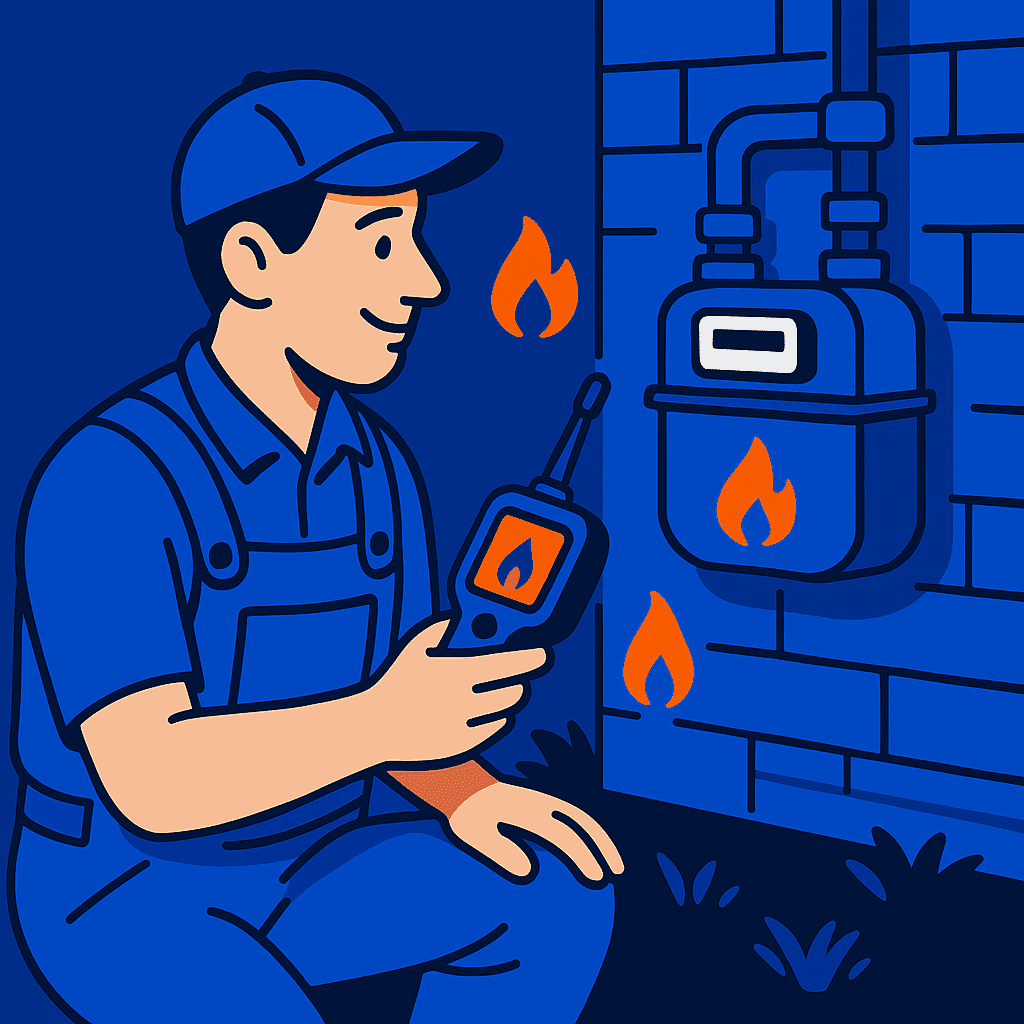
Not every gas leak announces itself. The dramatic ones get the emergency response they deserve. The frustrating ones are different: a faint smell that comes and goes, gas usage that has crept up with no explanation, or a buried supply run that the emergency engineer has isolated but nobody can say exactly where the leak sits. That is where gas leak detection earns its keep.
We have spent more than 30 years finding hidden leaks across Cornwall and Devon, and the same detection equipment that pinpoints water and heating leaks, tracer gas, thermal imaging and acoustic listening, locates the escape point on gas pipework too. We find the precise spot, mark it and document it, so the repair work that follows is small, targeted and quick to quote.
One thing we will always be straight about: we are leak detection specialists, not a gas repair firm. Locating the leak is our job. Repairing gas pipework or appliances is legally work for a Gas Safe registered engineer, and we will tell you that plainly rather than blur the line.
Signs of a gas leak
Natural gas has no smell of its own. Suppliers add a sulphur-like odorant called mercaptan so that escaping gas smells of rotten eggs, which is why the smell is the sign most people notice first. National Gas and the Gas Safe Register both list it as the number one warning. Watch for:
- A rotten egg or sulphur smell, even faint, even intermittent
- Hissing or whistling near pipework, appliances or the meter
- House plants dying for no obvious reason near a pipe run
- Feeling unwell indoors: headaches, dizziness or nausea that ease when you go outside
- Gas usage creeping up with no change in how you use heating or cooking
- Appliance warning signs: a lazy yellow or orange flame instead of a crisp blue one, soot or black marks around the appliance, or a pilot light that keeps going out. The Gas Safe Register flags these as signs an appliance is burning incorrectly and needs a Gas Safe engineer
Our guide on how to detect a gas leak walks through each of these signs in more detail, including the checks that are safe to do yourself and the ones that are not.
What to do immediately
If you notice any of the signs above and you can smell gas now, follow the National Gas Emergency steps before you call anyone else, including us:
No switches, no flames
Do not turn lights or anything electrical on or off, do not smoke, and do not strike matches or lighters. A spark can ignite escaping gas.
Ventilate
Open doors and windows to let the gas disperse as you leave.
Turn off at the meter
If the emergency control valve at the meter is safe and easy to reach, turn the gas off. If it is in a cellar or you are unsure, skip this and just leave.
Get out and call 0800 111 999
Get everyone outside, then call the free National Gas Emergency line from outside the property or from a neighbour’s. An emergency engineer attends to make the situation safe.
The emergency engineer’s job is to make things safe, which can mean isolating your supply. What they do not do is repair private pipework or appliances, or spend hours tracing a buried leak to the centimetre. Cadent and SGN both say the same in their emergency guidance: once the property is safe, finding and fixing the fault on your side of the meter is down to you. That follow-up is exactly where we come in.
How professional gas leak detection works
Once there is no immediate danger, detection is a process of elimination with the right tools in the right order, the same discipline we apply to water leak detection. Nothing gets dug up or opened on a guess.
Tracer gas testing
The pipe section is isolated and charged with the industry standard tracer gas, a non flammable mix of 5 per cent hydrogen in 95 per cent nitrogen. The hydrogen molecules are small enough to escape through the leak and rise through soil, screed or concrete, where a sensitive probe picks them up at the surface directly above the fault. It is the most reliable way to locate leaks on buried or concealed runs, and our tracer gas leak detection page explains the method in full.
Thermal imaging
Our FLIR cameras read the surface temperature patterns that an escaping gas or the moisture it disturbs can create, and they let us survey walls and floors quickly without drilling. See how thermal imaging leak detection works in practice.
Acoustic listening
Gas escaping from a pressurised pipe makes a noise. Sensitive ground microphones and listening equipment amplify it through hard surfaces and narrow the search to a small area before the tracer gas confirms the exact spot. More on our acoustic leak detection service.
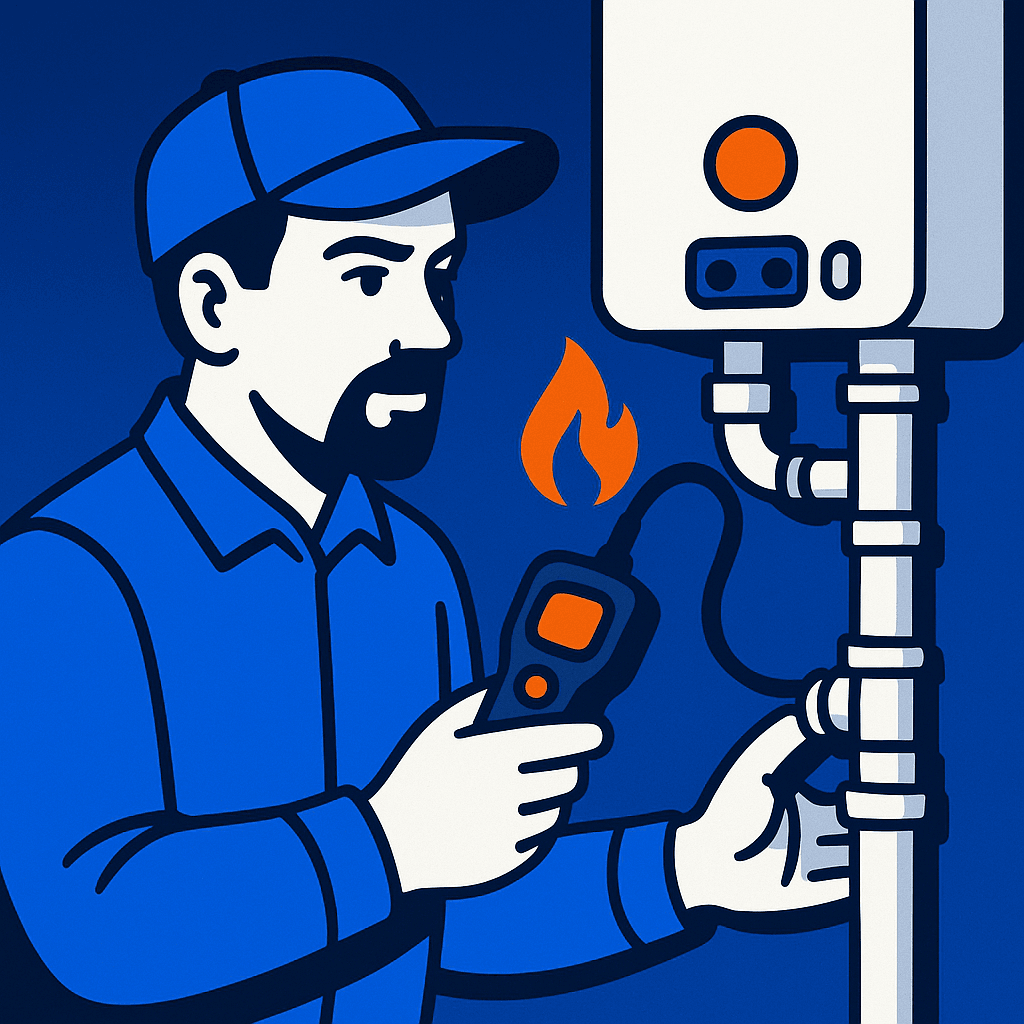
Every survey ends the same way: the leak position marked, photographed and written up. If the leak has caused damage and you are claiming, the report is built for your insurer’s process, the same way as our trace and access service documents water leaks. You then hand one precise location to a Gas Safe registered engineer instead of paying for exploratory work.
Natural gas and carbon monoxide: know the difference
People often use “gas leak” to mean two different hazards, and they need different responses.
A natural gas leak is unburnt fuel escaping from pipework or a fitting. Thanks to the added odorant you can usually smell it, and the response is the emergency drill above: ventilate, leave, call 0800 111 999.
Carbon monoxide (CO) is produced when gas or any other fuel burns incompletely, usually inside a faulty or poorly ventilated appliance. The NHS and the Gas Safe Register both make the key point: CO is colourless and odourless, so you cannot smell it at all. Symptoms include headache, dizziness, nausea and breathlessness, and high exposure can cause collapse and loss of consciousness. If you suspect CO, stop using the appliance, get into fresh air and seek medical advice; in an emergency call 999.
Because you cannot detect CO with your nose, an audible carbon monoxide alarm in any room with a fuel-burning appliance is the protection both organisations recommend. Detection equipment like ours traces escaping fuel gas on pipework; it is not a substitute for a CO alarm or for having appliances serviced by a Gas Safe registered engineer.
Gas Safe engineer or detection specialist: who do you need?
Under the Gas Safety (Installation and Use) Regulations 1998 it is illegal for anyone who is not Gas Safe registered to work on gas appliances and fittings. The HSE and the Gas Safe Register are unambiguous about that, and so are we. Here is who handles what:
| Situation | Who you need | Why |
|---|---|---|
| You can smell gas now | National Gas Emergency, 0800 111 999 | Free emergency line; an engineer attends to make the property safe |
| Appliance repair, servicing or installation | Gas Safe registered engineer | Legally required for any work on gas appliances and fittings |
| A suspected leak nobody can locate | Detection specialist (us) | Tracer gas, thermal and acoustic equipment pinpoints the leak without exploratory damage |
| Repairing the pipe once it is found | Gas Safe registered engineer | We hand over a marked location and report so the repair is small and quick to quote |
In practice the jobs often chain together: the emergency engineer makes the property safe and isolates the supply, we trace the leak to its exact position, and a Gas Safe engineer carries out the repair before the supply goes back on. Booking the detection survey in between is what stops the middle step turning into dug-up driveways and lifted floors.
Gas leak detection in Cornwall and Devon
This is our patch, and it is not the easiest one for buried services. Salt-laden coastal air speeds up corrosion of exposed metal pipework and fittings, the housing stock includes plenty of granite, cob and stone properties with services buried in solid floors, and rural homes often have long external supply runs crossing gardens, yards and driveways. Leaks on runs like that are genuinely hard to place without the right equipment.
We are a local Cornwall business based near Saltash, not a franchise sent down from up country, so if you have been searching for gas leak detection specialists anywhere between Land’s End and the Devon border, the team that answers the phone is the team that turns up. No call-out fees, a fixed price agreed before we travel, and fast response across both counties.
Helpful gas safety guides
Want to understand the problem before you book anything? Start here:
- How to detect a gas leak covers the warning signs, the safe checks you can do yourself and when to call 0800 111 999.
- Tracer gas leak detection explains the hydrogen and nitrogen method we use on buried and concealed pipework.
- Thermal imaging leak detection shows how the FLIR cameras survey walls and floors without drilling.
- Acoustic leak detection covers the listening equipment that narrows the search area first.
Suspect a gas leak that is not an emergency?
If you can smell gas right now, call the National Gas Emergency line on 0800 111 999 first. Always.
For everything after that, the intermittent smell, the isolated supply, the buried run nobody can place, one detection visit pinpoints the leak and gives you the evidence your engineer and your insurer need.
Call Dickie on 07822 025 911
No Find, No Fee on residential leak detection (subject to terms). No call-out fees, fixed prices, and a local team covering the whole of Cornwall and Devon. You can also email hello@dcileakdetection.co.uk or use the quote form above.
07822 025 911Recent gas leak detection jobs
Real jobs from our records, with the customer details left out:
Where we cover
We provide gas leak detection across Cornwall and Devon from our base at Tideford, near Saltash. Local pages: Plymouth, Exeter, Truro, St Austell, Newquay, Falmouth, Torquay, Newton Abbot, Barnstaple, Liskeard, Saltash, Tiverton, Bodmin, Launceston, Penzance, Helston, and the full list on our Cornwall and Devon pages.